
Yes, rats can climb walls. Their claws grip rough surfaces such as brick, stucco, and wood. They can also use ivy, pipes, and nearby branches to reach a roof. From there, a small gap near an eave or vent may let them into an attic.
For homeowners, the key is to check high entry points, not just gaps near the ground. Trim plants away from the roofline and look for openings around vents, pipes, and damaged fascia. Climbing rats can reach spaces where they may chew wiring, damage insulation, and leave droppings.
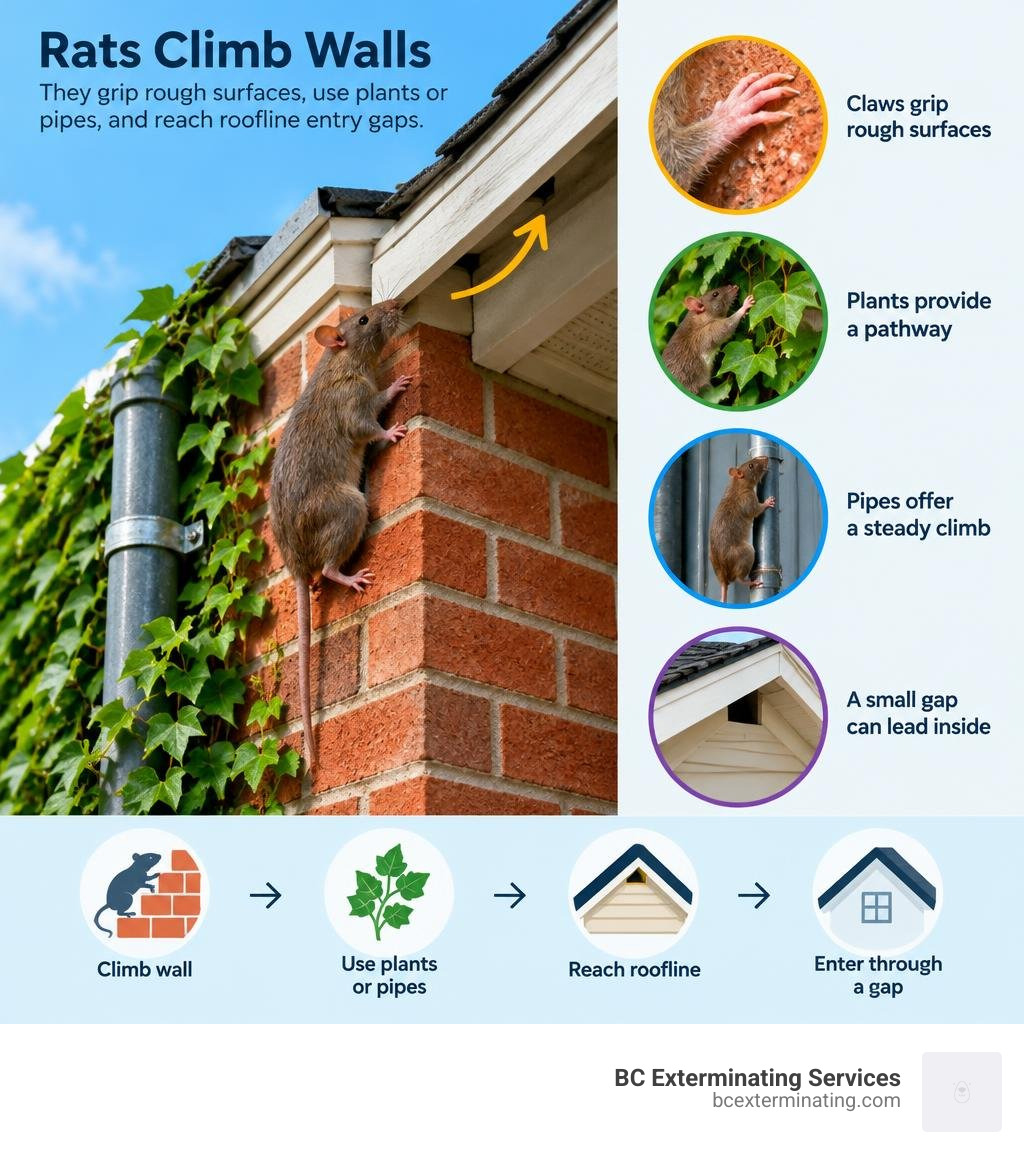
Understanding how rodents scale vertical structures requires looking closely at their evolutionary mechanics. In our daily inspection work across residential and commercial properties, we regularly see rats navigating vertical brickwork and siding with startling ease. According to National Geographic research on rat biology and physical capabilities, rats are built with an array of physical adaptations that make them exceptional climbers.
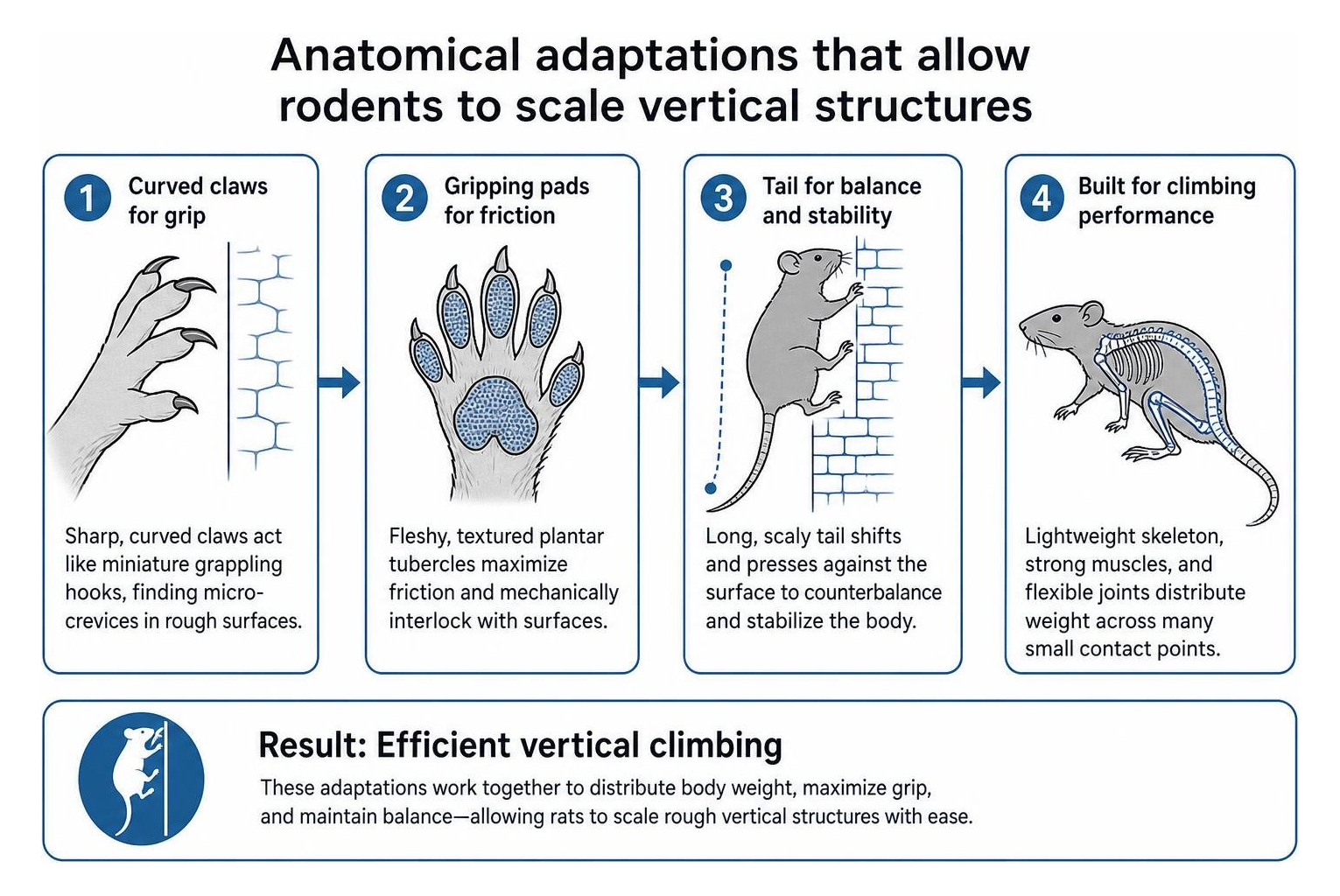
Rats possess sharp, curved claws on both their front and hind paws. These claws act like miniature grappling hooks, finding micro-crevices in building materials that appear flat to the human eye. Beneath their toes and paws sit fleshy, highly textured gripping pads (plantar tubercles). These pads maximize surface friction and allow the animal to adhere to vertical planes through mechanical interlocking and weight distribution.
Their long, scaly tails provide active counterbalance. As a rat ascends a wall, its tail shifts continuously, pressing against the substrate to stabilize its center of gravity. Combined with a lightweight skeletal structure, exceptional muscle-to-weight ratio, and flexible joints that can compress and rotate, the rodent can distribute its body weight evenly across multiple tiny contact points.
While all common pest rats can climb, species exhibit distinct behavioral tendencies and physical proficiencies:
The exterior of a modern building presents a variety of textures, many of which provide ideal footing for rats climbing walls. When evaluating building envelopes, we categorize exterior building materials based on their vulnerability to rodent ascent:
| Building Material | Texture & Grip Level | Rodent Climbing Feasibility | Common Climbing Method |
|---|---|---|---|
| Brick Masonry | High (porous face & recessed mortar joints) | Extremely High | Direct vertical ascent using mortar lines like ladder rungs |
| Rough Stucco | High (aggregate texture, rough finish) | Extremely High | Direct vertical scaling via micro-crevices |
| Rough Wood Siding | Moderate to High (grain ridges, overlapping laps) | High | Claws latch directly into soft wood grain |
| Concrete Block | Moderate (porous surface) | High | Claws grip aggregate and surface pitting |
| Vinyl / Aluminum Siding | Low (smooth surface) | Moderate to Low | Ascends via corner joints, seam edges, or nearby downspouts |
| Smooth Glass / Polished Metal | None (slick surface) | Very Low (Impossible vertically) | Cannot climb without corner bracing or adjoining textured frames |
Rats rarely scale a blank, four-story polished facade without assistance. Instead, they exploit architectural pathways and landscaping that connect the ground to your upper structural envelope.

When climbing rats breach upper levels, the damage is rapid, structural, and hazardous:
Long-term rodent management relies on structural exclusion rather than temporary measures. To protect your property, we recommend implementing systematic environmental and structural adjustments.
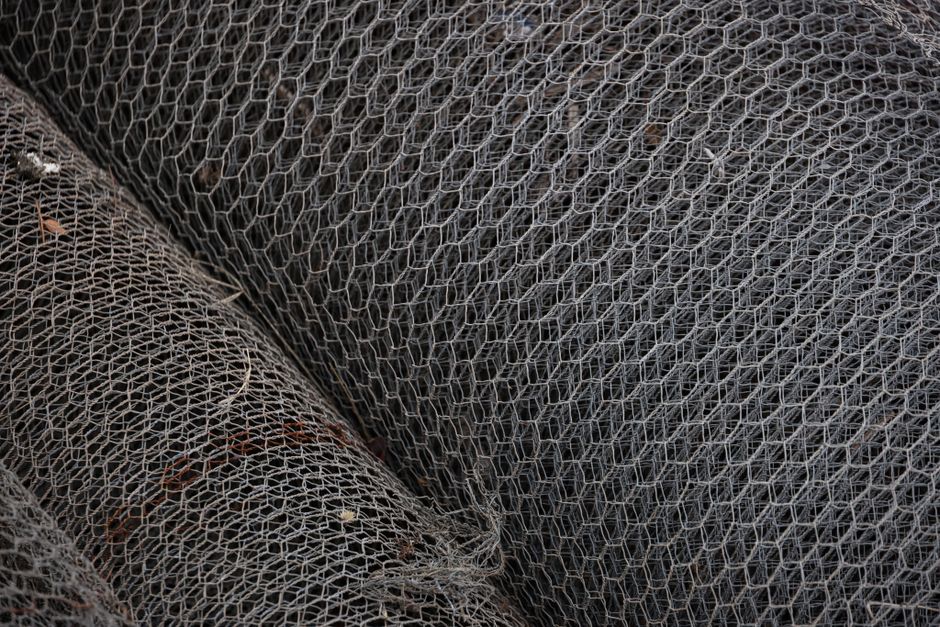
Exclusion involves creating physical barriers that rodents cannot climb, gnaw through, or squeeze past. According to Lambert Lab neuroscience findings on rodent agility and behavior, rodents continuously test their environments for weaknesses and can exploit microscopic structural vulnerabilities.
Rats cannot climb completely smooth glass, polished metal, or slick, high-gloss painted surfaces on a vertical plane because their claws cannot engage the substrate. However, standard interior drywall with textured paint or paper coating often provides enough micro-abrasion for a determined rat to ascend, especially in corners where it can brace its back against one wall and push its feet against the other.
An adult rat can leap nearly three feet straight up from a standing start and cover more than four feet in a horizontal leap. This leaping ability allows them to bypass smooth foundation barriers, vault onto low-hanging cables, and latch onto textured surfaces or downspouts well above ground level.
Yes, properly installed smooth sheet metal flashing creates an effective physical barrier. If the flashing band is sufficiently wide (typically 12 inches or greater) and installed without overlapping seams that create footholds, rats cannot gain enough claw traction or footpad friction to bypass the barrier.
Rats possess extraordinary vertical mobility, turning rough walls, ivy, and utility conduits into direct access routes into your attic and walls. Protecting your home requires identifying these elevated vulnerabilities and reinforcing the building envelope from foundation to ridge vent.
At BC Exterminating Services, we protect homes and commercial buildings throughout the Washington, DC metro area (including Gaithersburg, MD) with our thorough, inspection-first methodology. We identify high and low entry points, install durable structural exclusion barriers, and resolve active infestations using EPA-registered, low-odor products that are environmentally responsible and safe for pets and families.
If you suspect rodents are scaling your exterior walls or nesting in your attic, visit our team for comprehensive rodent exclusion and pest control services to permanently secure your property.