
For effective mouse control, remove easy food and water, seal gaps as small as 1/4 inch, and set traps along walls where you find droppings or gnaw marks. Check traps daily and keep them out of reach of children and pets. Trapping alone won’t solve the problem if mice can still get inside.
Mice often move around at night, so you may find signs before you see one. Act early: mice breed quickly, can damage wiring and food packaging, and may spread disease. The guide below shows how to spot activity, choose traps, close entry points, and clean up safely.
Because mice are nocturnal creatures, you will rarely spot them scampering across the living room rug in broad daylight unless an infestation has grown severe. Instead, detecting an issue early requires paying attention to the subtle physical evidence they leave behind during their nighttime foraging trips.
The most unmistakable sign of rodent activity is the presence of droppings. A single house mouse deposits between 50 and 75 droppings pellets per day. These droppings are tiny (about 1/8 to 1/4 inch long), dark, and pointed at both ends, resembling small grains of black rice. You are most likely to find them concentrated inside kitchen pantries, beneath the kitchen sink, along back baseboards, and behind large appliances like refrigerators and stoves.
Beyond droppings, keep an eye out for these telltale indicators:
Overlooking these early clues can quickly compound the situation. Understanding the severe risks with rodent infestations—from dangerous electrical house fires caused by chewed wire insulation to the contamination of kitchen surfaces—underscores why prompt detection is vital for every homeowner.
Not all indoor rodents are the same. In suburban and wooded neighborhoods across Montgomery County and the greater Washington, DC metro area, homeowners frequently encounter either the standard house mouse (Mus musculus) or the deer mouse (Peromyscus maniculatus). Differentiating between the two species is crucial because their associated health hazards vary significantly.
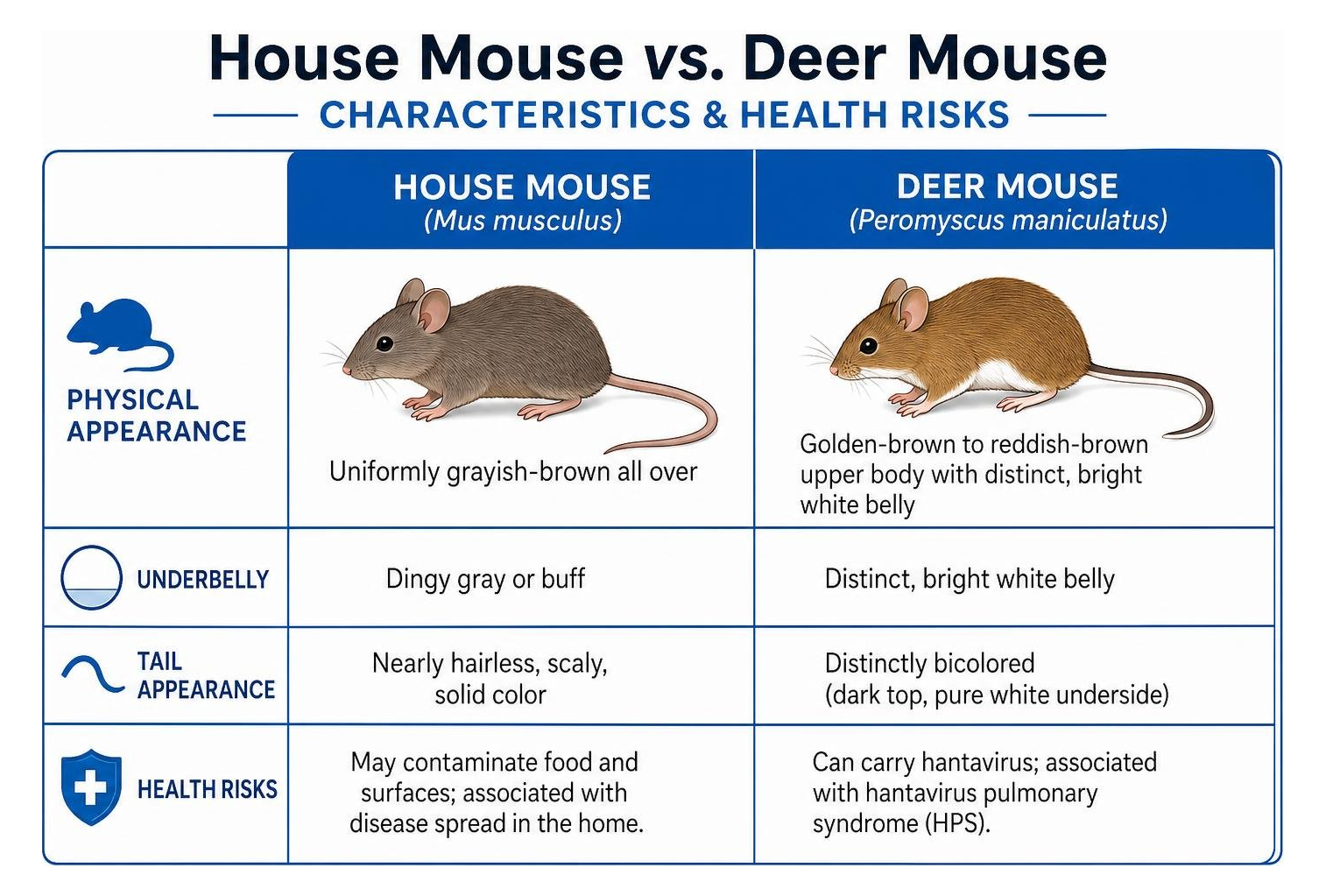
| Physical & Behavioral Trait | House Mouse (Mus musculus) | Deer Mouse (Peromyscus maniculatus) |
|---|---|---|
| Coat Color | Uniformly grayish-brown all over | Golden-brown to reddish-brown upper body |
| Underbelly | Dingy gray or buff | Distinct, bright white belly |
| Tail Appearance | Nearly hairless, scaly, solid color | Distinctly bicolored (dark top, pure white underside) |
| Eyes and Ears | Small, beady eyes; moderate ears | Very large, protruding black eyes; large leaf-like ears |
| Primary Habitat | Indoors, urban structures, basements | Wooded rural/suburban areas, sheds, attics, rustic cabins |
| Primary Health Hazards | Salmonella, ringworm, asthma triggers, mites | Sin Nombre Hantavirus (HPS), Lyme disease vector |
While house mice readily contaminate food with Salmonella bacteria and trigger indoor allergy or asthma attacks through shed proteins and urine, deer mice present an even more dangerous public health hazard. Deer mice serve as the primary reservoir for Sin Nombre virus, which causes Hantavirus Pulmonary Syndrome (HPS). According to medical data, HPS carries a human fatality rate of approximately 36%.
The University of California IPM guidelines on deer mice emphasize that because hantavirus is transmitted through inhaling airborne dust contaminated with rodent urine, saliva, or droppings, identifying deer mouse activity requires rigorous decontamination protocols.
Mice are creatures of habit that navigate primarily by touch and memory rather than sight. Because their eyesight is poor, they hug vertical surfaces, utilizing their sensitive whiskers (vibrissae) to guide them along wall edges.
As mice travel these runs repeatedly, the natural oils, dirt, and grease in their fur leave dark, smudged rub marks along baseboards, wall corners, and floorboard gaps.
In addition to run marks, inspect potential nesting locations. Mice construct warm, spherical nests out of shredded soft materials, such as attic fiberglass insulation, paper towels, cardboard boxes, and fabric scraps. Unlike rats, which may travel hundreds of feet for sustenance, mice maintain a surprisingly short foraging radius—usually venturing no more than 10 to 25 feet away from their primary nest.
If you find droppings or shredded materials in your upper levels, evaluate whether is your attic secretly attracting rodents due to quiet nesting spaces, unsealed roofline soffits, or stored holiday storage bins.
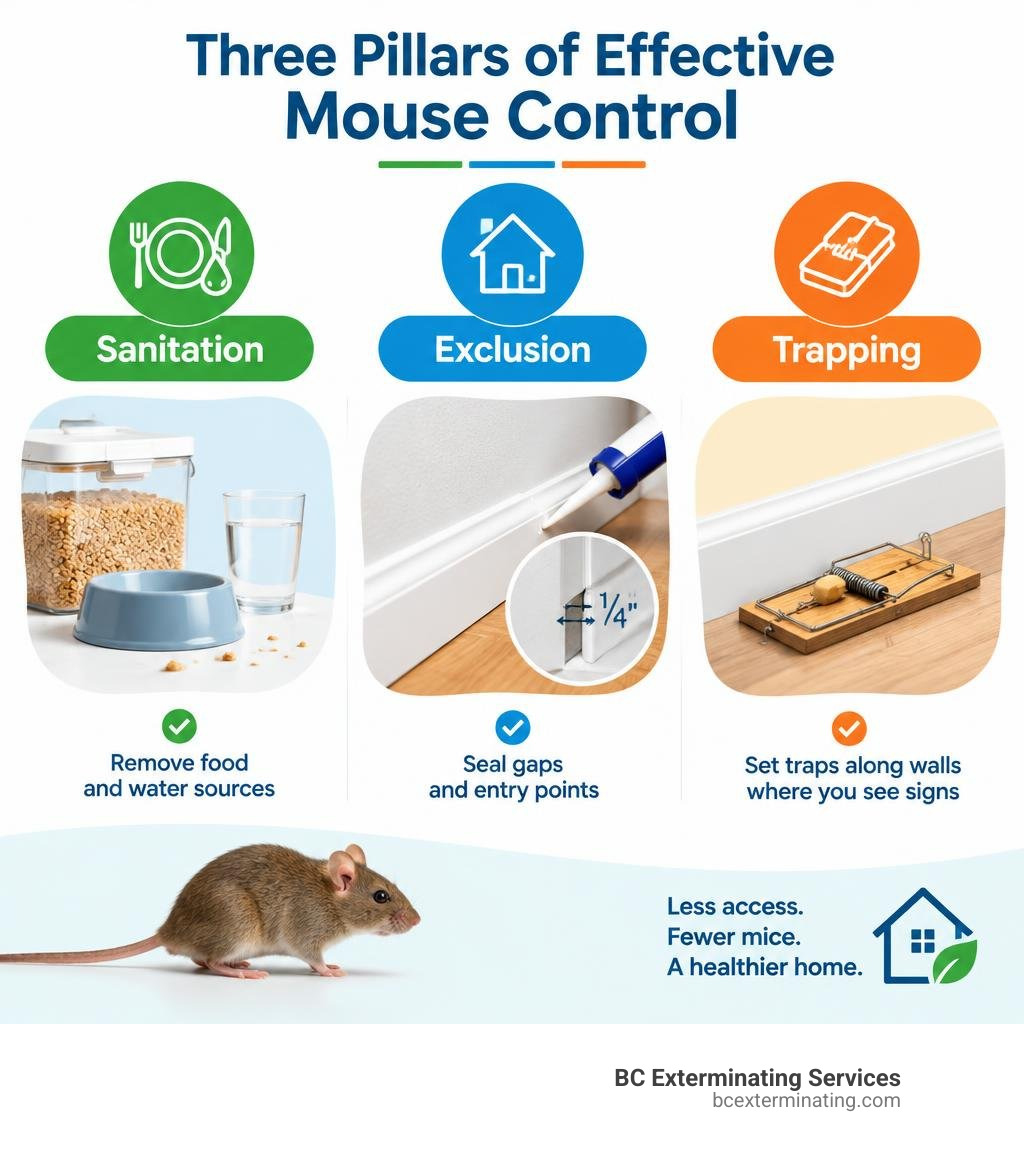
Achieving lasting mouse control requires a systematic approach known as Integrated Pest Management (IPM). Relying exclusively on temporary traps without addressing entry points or attractants creates a frustrating cycle where new rodents continually replace captured ones.
As outlined in the Penn State Extension guide on eliminating mice with IPM, successful long-term management rests on three pillars:
A full-grown house mouse can squeeze its flexible skeleton through a hole or crack as small as 1/4 inch wide—roughly the diameter of a standard number two pencil or smaller than a dime. In addition, mice are exceptional athletes: they can leap 12 inches vertically, run straight up rough exterior masonry, walk across overhead utility wires, and easily survive a 9-foot vertical drop unharmed.
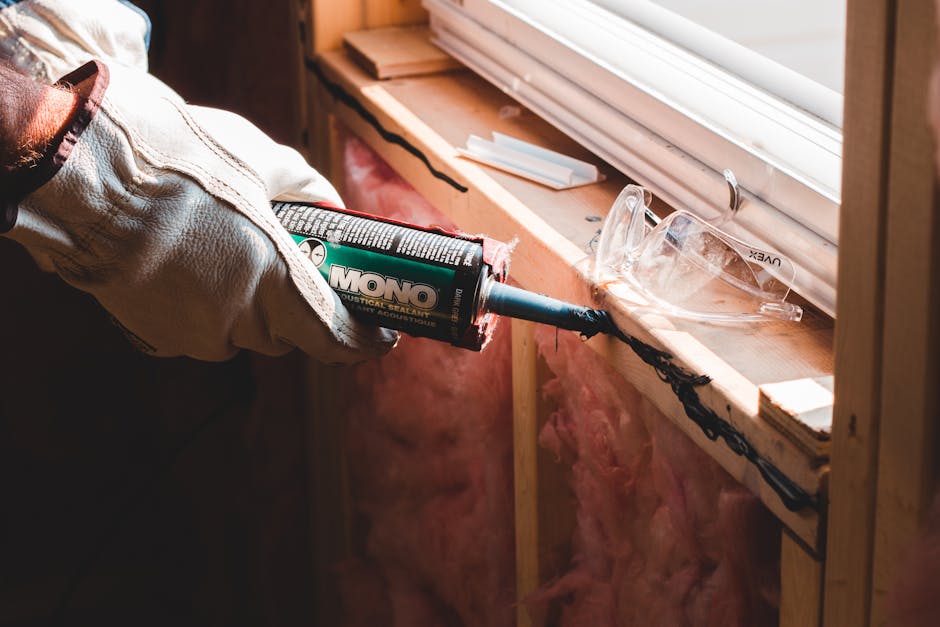
To build a permanent barrier against mouse entry, conduct an exterior and interior inspection using these exclusion techniques:
Taking the time to seal structural gaps helps stop mice in your walls before they cause costly damage to building materials and hidden utility lines.
Mice are chronic nibblers. Rather than eating a single large meal, a mouse makes 20 to 30 sporadic visits to different food sites each night, consuming mere fractions of a gram at each stop. This behavior means that even microscopic crumbs or open food boxes can sustain a nesting family.
Eliminate attractants by following these sanitation protocols:
When dealing with mice already indoors, choosing the right removal method is essential for quick, humane, and safe results.
| Trap / Control Type | Kill Efficiency & Speed | Humane Rating | Safety Around Pets & Kids | Best Use Scenario |
|---|---|---|---|---|
| Modern Snap Traps | High; instant mechanical kill when placed properly | High; rapid cervical dislocation | Moderate; can snap curious fingers or paws | Indoor basements, pantries, utility closets, attics |
| Electronic Kill Traps | Very High (>95% kill rate in under 5 seconds) | Highest; instant high-voltage shock delivery | High; fully enclosed tunnels protect fingers & pets | Living spaces, kitchen cabinets, pet-friendly households |
| Glue Boards | Moderate capture rate; slow death | Lowest; inhumane due to stress and dehydration | Low; adhesive sticks readily to pet paws and fur | Secondary monitoring; generally not recommended |
| Chemical Rodenticides | High population knockdown | Low; causes internal hemorrhaging over several days | Very Low indoors; high secondary poisoning risk | Exterior tamper-resistant bait stations managed by pros |
Deploying traps randomly in the middle of a room rarely catches mice because rodents avoid open, exposed areas.
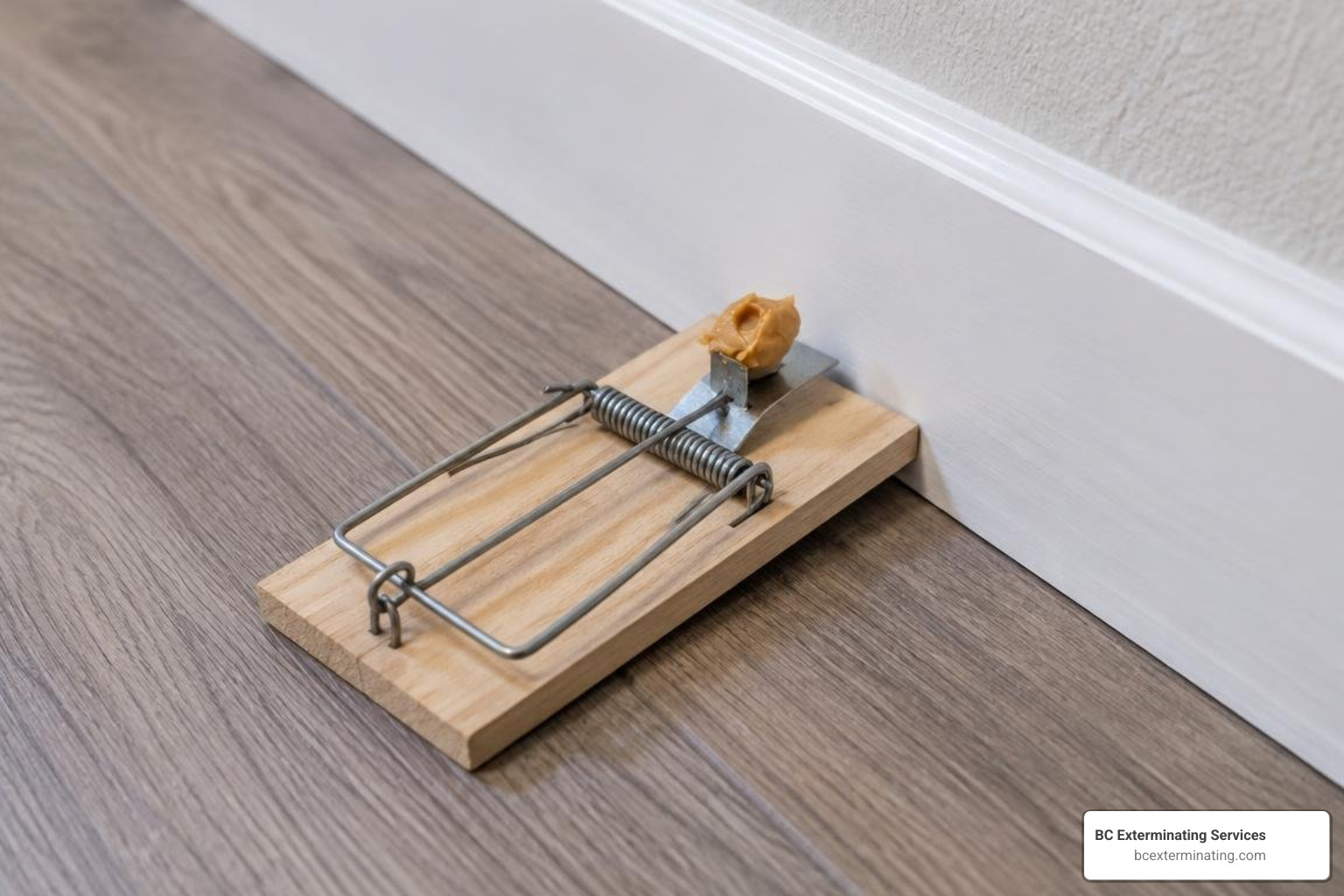
To maximize your success rate:
For testing details and insights on trap selection, read the comparative testing on modern electronic mouse traps as well as the University of Nebraska-Lincoln research on controlling house mice.
Following proper setup protocols allows homeowners to clear unwanted mice from your home without wasting time on ineffective techniques.
While chemical rodenticide baits are available on the commercial market, using loose poison baits indoors carries significant risks.
Common over-the-counter rodenticides rely on anticoagulant compounds like brodifacoum, chlorophacinone, or diphacinone, which prevent blood clotting. If poisoned mice crawl inside inaccessible wall voids, floor joints, or attic floorboards to die, their decomposing carcasses produce intense, lingering foul odors that can persist for weeks and attract secondary insect infestations.
Furthermore, loose indoor baits present dangerous toxicity risks to children and household pets through accidental ingestion or secondary poisoning (such as a pet consuming a lethargic, poisoned mouse).
When rodenticides are necessary for population knockdown, EPA regulations mandate placing EPA-registered bait blocks exclusively inside locked, tamper-resistant bait stations that keep poison out of reach of non-target wildlife, pets, and children.
For severe upper-level infestations, explore fast methods for clearing a mouse infestation from your loft that prioritize physical trapping over loose chemical toxicants.
Cleaning up rodent contamination requires strict adherence to biosafety protocols to prevent infectious pathogens from becoming airborne.
Follow this step-by-step procedure when sanitizing contaminated areas:
Review the official Alberta Health Services protocols on house mouse cleanup for further health guidance. Safe sanitation and structural hygiene are central to how pest control services help protect health and property value across residential communities.
Mouse populations can expand rapidly. A single female house mouse reaches reproductive maturity in just 6 to 10 weeks and can produce 5 to 10 litters per year, with each litter averaging 5 to 6 pups. Because mice breed year-round in temperature-controlled homes, a pair of mice can theoretically expand into dozens of rodents within just a few months, quickly escalating structural damage and health concerns.
Mechanical snap traps and electronic kill traps are preferred for indoor mouse management because they provide immediate confirmation of capture, allow for clean disposal, and eliminate the risk of rodents dying and decomposing inside hidden wall cavities or ceilings. They also remove the risk of accidental poisoning for curious children and pets.
While minor mouse issues can occasionally be resolved with a few well-placed snap traps and basic caulking, complex or recurring infestations demand professional expertise.
You should reach out to a licensed pest management team if:
Professional technicians understand how pest control companies stop recurring pests by conducting root-cause inspections, applying commercial-grade exclusion materials, and implementing targeted remediation plans. Scheduling specialized residential pest control provides peace of mind and keeps your home permanently rodent-free.
Achieving reliable, long-term rodent control requires looking beyond temporary fixes. By implementing structural exclusion, practicing rigorous sanitation, and deploying smart trapping strategies along active travel corridors, you can protect your living space from property damage and health hazards.
If you live in Gaithersburg, Rockville, Bethesda, Silver Spring, Germantown, or anywhere throughout Montgomery County and the Washington, DC metro area, our team is here to help. At BC Exterminating Services, we provide thorough inspection-first pest solutions, complete physical exclusion, and pet-friendly treatments to solve rodent problems at the source. Check your property for 1/4-inch gaps today and establish a proactive defense to keep your home comfortable, clean, and secure year-round.