
If you hear scratching in your walls, look for droppings and entry gaps, then remove easy food sources. Set snap traps along baseboards near signs of activity and check them daily. Once the mice are gone, seal entry points with metal mesh and caulk. Do not put poison inside the walls: a mouse could die where you cannot reach it.
Scratching alone cannot confirm it is mice. If the noise continues, you cannot find the entry point, or you suspect a larger animal, call a pest professional. Acting early can help limit damage to insulation and wiring.
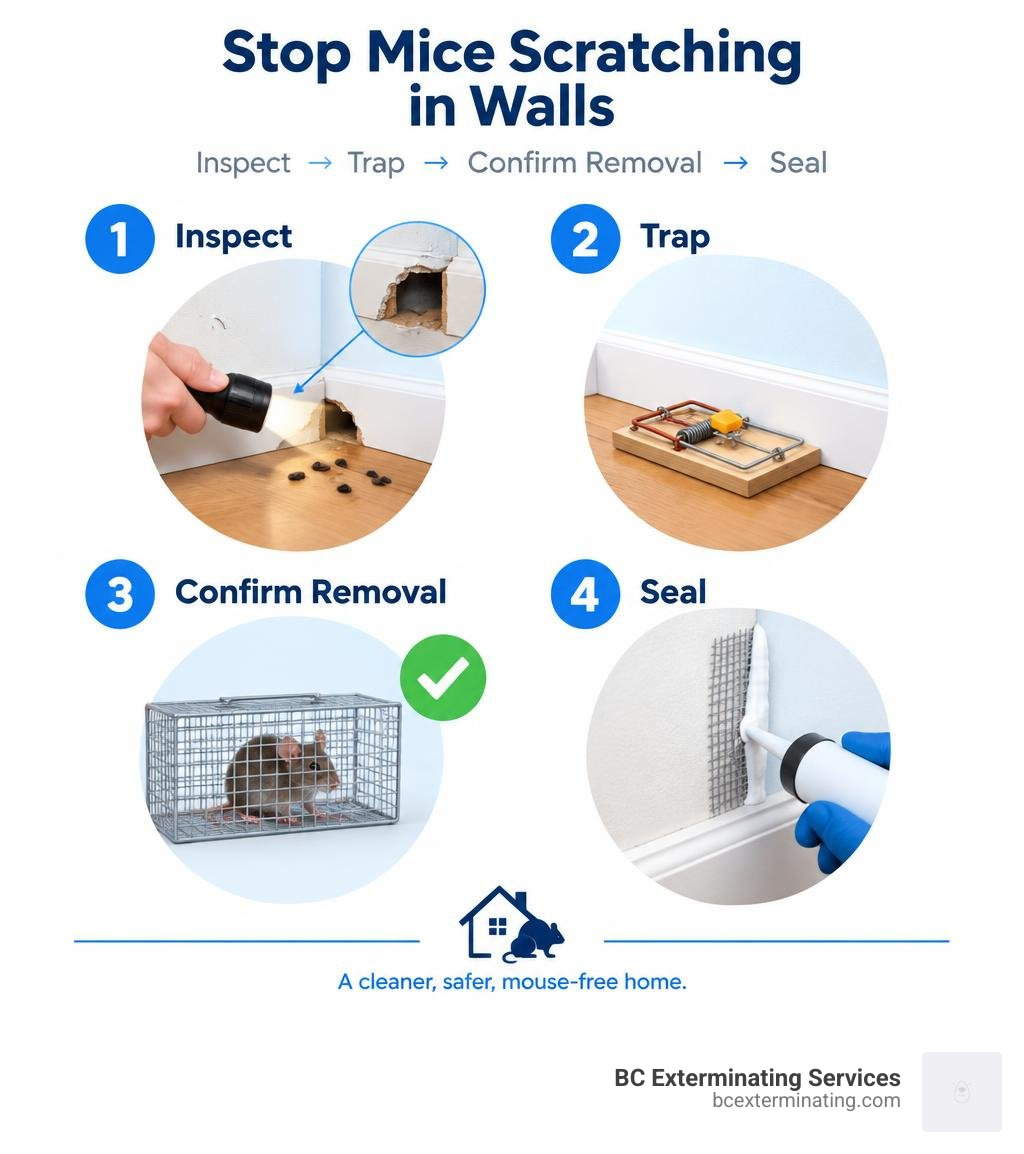
It is 2:00 a.m., the house is pitch black, and suddenly a faint, rhythmic scraping starts right behind your drywall. While the sound can feel unnerving, understanding why it happens makes solving the issue far more manageable.
Mice are predominantly nocturnal creatures. During the day, they remain nestled inside wall voids, floor joists, or warm pockets of attic insulation where predators and humans cannot reach them. Once night falls and ambient household noise subsides, their activity peaks. A single house mouse makes as many as 200 small feeding visits before dawn, commuting between cozy wall cavities and food sources across your kitchen, pantry, and crawl space.
The actual scratching sound you hear comes from two distinct behaviors: movement and gnawing. Wall voids act like natural acoustic chambers—the hollow space between standard drywall studs amplifies even the smallest movements. Tiny claws scrambling along vertical 2×4 framing, pipes, or fiberglass insulation sound significantly louder than they actually are.
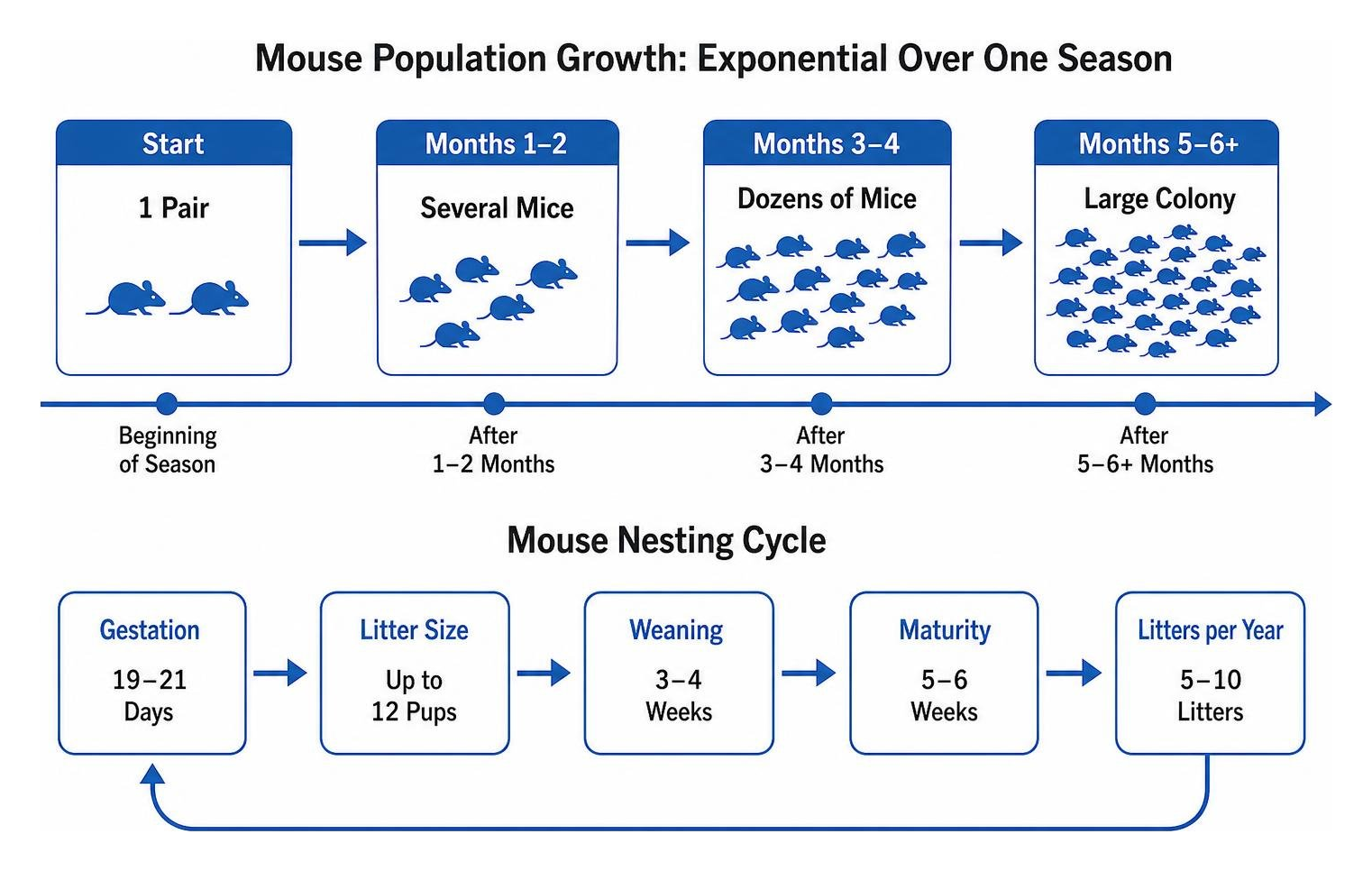
At the same time, rodents possess open-rooted incisors that grow continuously throughout their lives. To keep their teeth trimmed, sharp, and functional, they must constantly gnaw on structural materials around them. If left undisturbed, a single breeding pair quickly turns into an extensive colony. A single female house mouse can produce 5 to 10 litters a year, with up to a dozen pups per litter. What begins as a single curious mouse navigating an exterior opening can escalate into dozens of rodents within a single season.
Not every noise inside a wall cavity belongs to a mouse. Identifying the exact creature behind the wall is crucial because the eviction strategy changes depending on whether you are dealing with small rodents, larger wildlife, or nesting insects.
| Pest / Wildlife | Noise Characteristics | Peak Activity Time | Dropping Size & Shape | Common Location |
|---|---|---|---|---|
| House Mouse | Light, persistent scratching, faint patter | Midnight to 5:00 AM | 1/4 inch, tapered ends (rice grain) | Lower walls, pantries, baseboards |
| Rat | Heavy dragging, dull thuds, loud gnawing | Late evening & night | 1/2 to 3/4 inch, blunt ends | Basements, lower wall cavities, crawl spaces |
| Tree Squirrel | Rapid scampering, sudden scrambling | Dawn & late afternoon | 3/8 inch, barrel-shaped | Attics, upper wall junctions, rooflines |
| Wasp Colony | Dry rustling, papery scratching, faint hum | Warm daylight hours | No visible droppings (chewed drywall dust) | Exterior wall voids, window frame cavities |
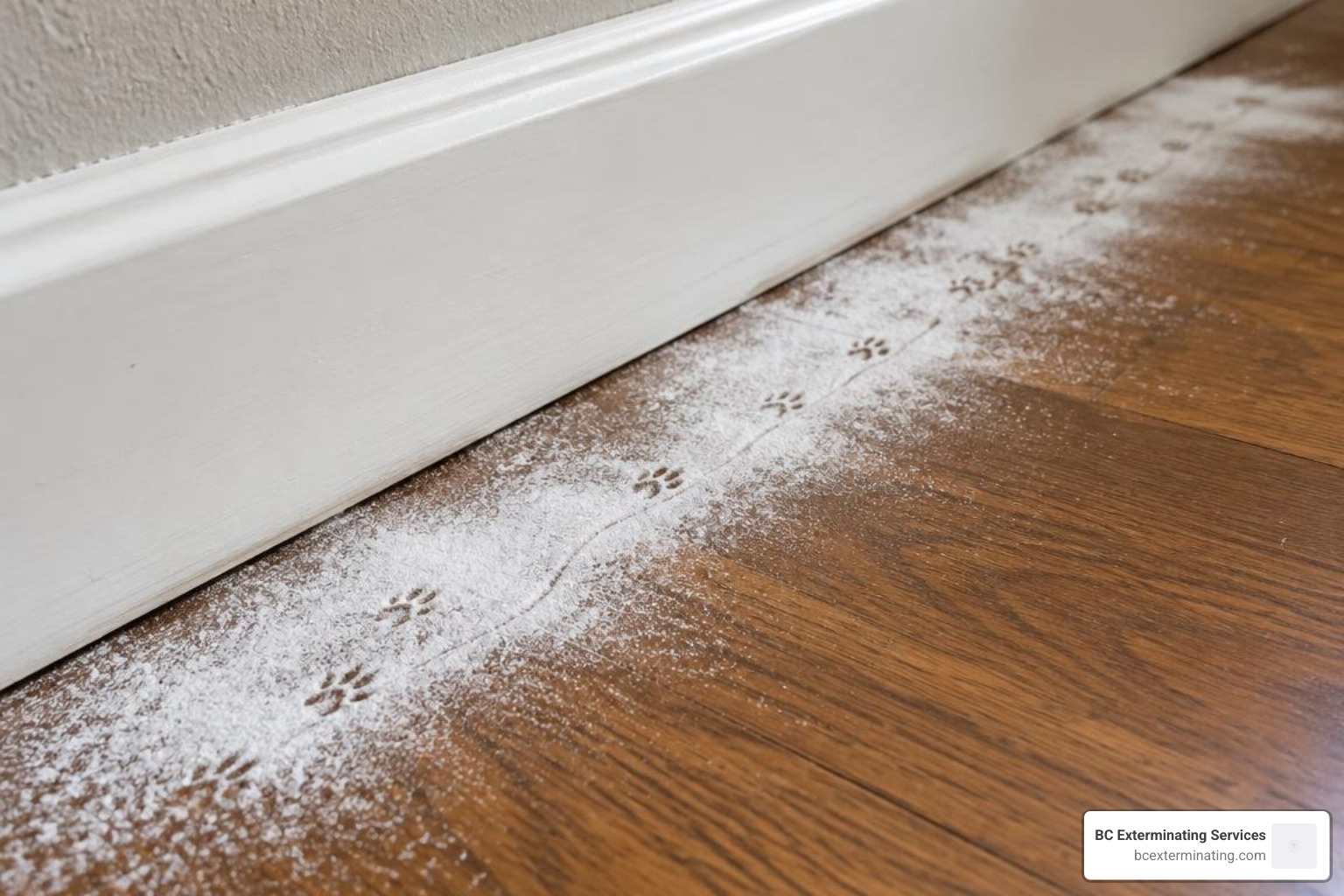
Before tearing into drywall or placing traps blindly, you can confirm whether mice are using specific baseboards as transit corridors by running a quick non-toxic tracking test.
Ignoring mice inside wall cavities does not merely cost you sleep; it introduces real fire hazards, insulation loss, and airborne pathogens into your living environment.
Mice can chew through surprisingly durable building materials, including drywall, wood, plastic conduits, and rubber weatherstripping. Their constant gnawing frequently targets the plastic insulation wrapping residential electrical wiring. Exposed, arcing copper wires hidden inside wall voids are a documented fire hazard; a 2022 analysis attributed a meaningful percentage of attic and wall-void fires across the western United States directly to rodent-damaged electrical wiring.
In addition to electrical hazards, nesting rodents shred fiberglass and cellulose insulation, creating thermal voids that compromise heating and cooling efficiency. Over time, urine saturation and fecal accumulation destroy insulation performance completely. As detailed in field assessments regarding signs of wildlife in your attic or walls, full insulation replacement following an uncontrolled infestation can easily range from several hundred to several thousand dollars.
From a health standpoint, house mice and deer mice carry significant biological hazards:
When cleaning localized rodent areas, always wear disposable nitrile gloves and a fitted N95 respirator. Never dry-sweep or vacuum rodent feces. Instead, mist the area thoroughly with an EPA-registered disinfectant or a 1:10 bleach-and-water solution, let it sit for 5 to 10 minutes, and wipe it up with disposable paper towels before sealing everything in heavy-duty plastic bags.
To eliminate mice permanently, you must follow a strict order of operations: sanitize first, trap inside the home second, and seal external entry points last.
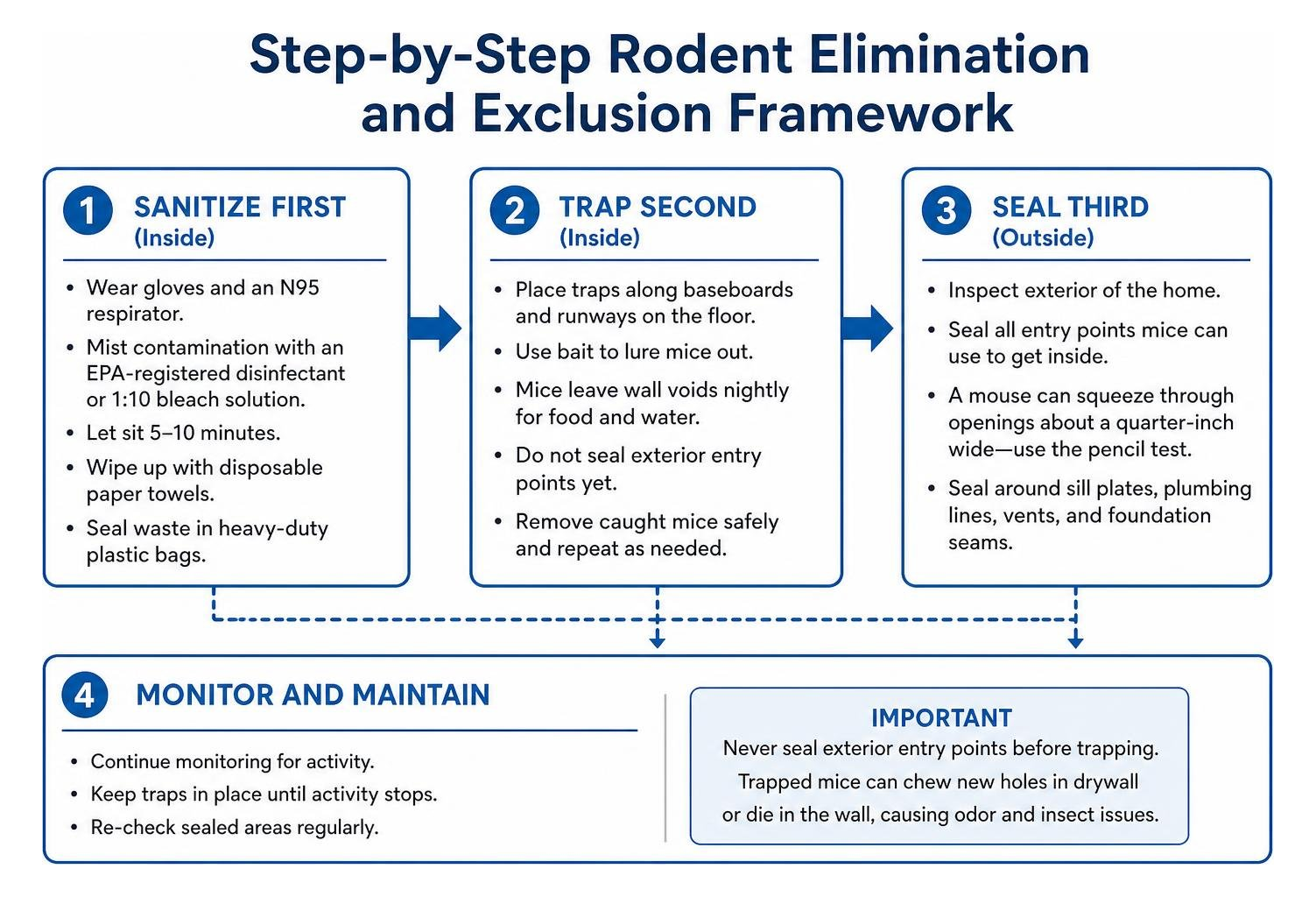
Attempting to seal your exterior walls before trapping the interior population will trap live animals inside the wall voids. When trapped, they either chew new escape holes through your interior drywall or die inside the wall, causing terrible odor and insect issues.
You do not need to cut holes in your walls to catch mice living inside them. Mice must leave the wall voids nightly to find food and water. By placing traps along their established runways on the floor, you can quickly draw them out.
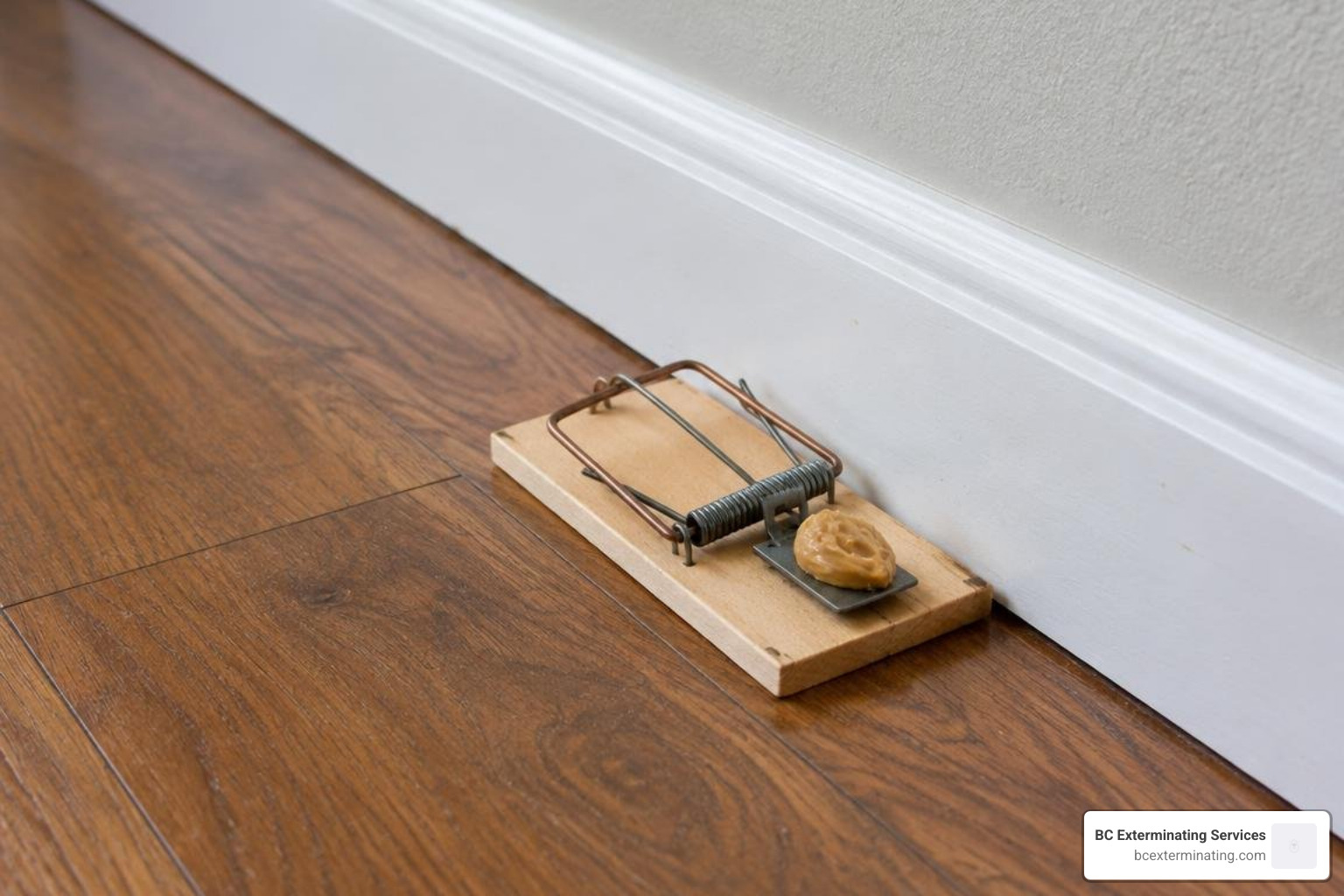
If you are dealing with a larger, persistent population across multiple rooms, comprehensive approaches demonstrate how strategic trapping and monitoring work together systematically to eliminate entire colonies.
Once interior trapping yields zero catches over several days, it is time to permanently seal every exterior entry point to keep new rodents from moving in.
Yes, consistent scratching in the exact same wall section almost always indicates an established nesting site or a heavily trafficked vertical runway. Because female mice have a gestation period of just 19 to 21 days and produce multiple litters per year, immediate trapping and removal are essential before the population multiplies throughout your home.
Yes. Mice can chew through standard drywall, hollow wood trim, insulation, and the protective plastic coating on electrical wiring. A persistent mouse can chew through standard drywall in approximately two weeks of intermittent gnawing. However, they cannot chew through concrete, brick, stone, or stainless steel wool.
Tossing poison pellets or rodenticides into wall voids is one of the most problematic DIY mistakes. When mice ingest poison, they do not immediately exit the home to look for water; they retreat to their safe nesting areas deep inside wall studs and die there. Within 48 to 72 hours, decomposing carcasses create an overwhelming, nauseating odor that can linger for weeks, drawing blowflies, carpet beetles, and maggots inside your walls. Always stick to mechanical snap traps for indoor infestations.
Hearing mice scratching in your walls can be stressful, but taking prompt, structured action will protect your home from costly structural damage and serious health risks. By diagnosing sounds accurately, clearing away food sources, placing baited snap traps along floor baseboards, and sealing every exterior opening with durable metal mesh, you can successfully reclaim your living space.
If scratching noises persist across multiple floors, exterior entry points are high up near rooflines, or you suspect larger wildlife is nesting inside your framing, our team at BC Exterminating Services is ready to help. Serving homeowners throughout the Washington, DC metro area—including Gaithersburg, MD—we use an inspection-first process paired with pet-friendly, low-odor, EPA-registered treatments. We do not just trap the active pests; we provide permanent physical exclusion so you never have to worry about rodents invading your walls again. Schedule a comprehensive inspection today for professional rodent exclusion and pest control you can count on.