Rats in My Walls: The Complete Extermination Walkthrough
What to Do When Rats Are Inside Your Walls
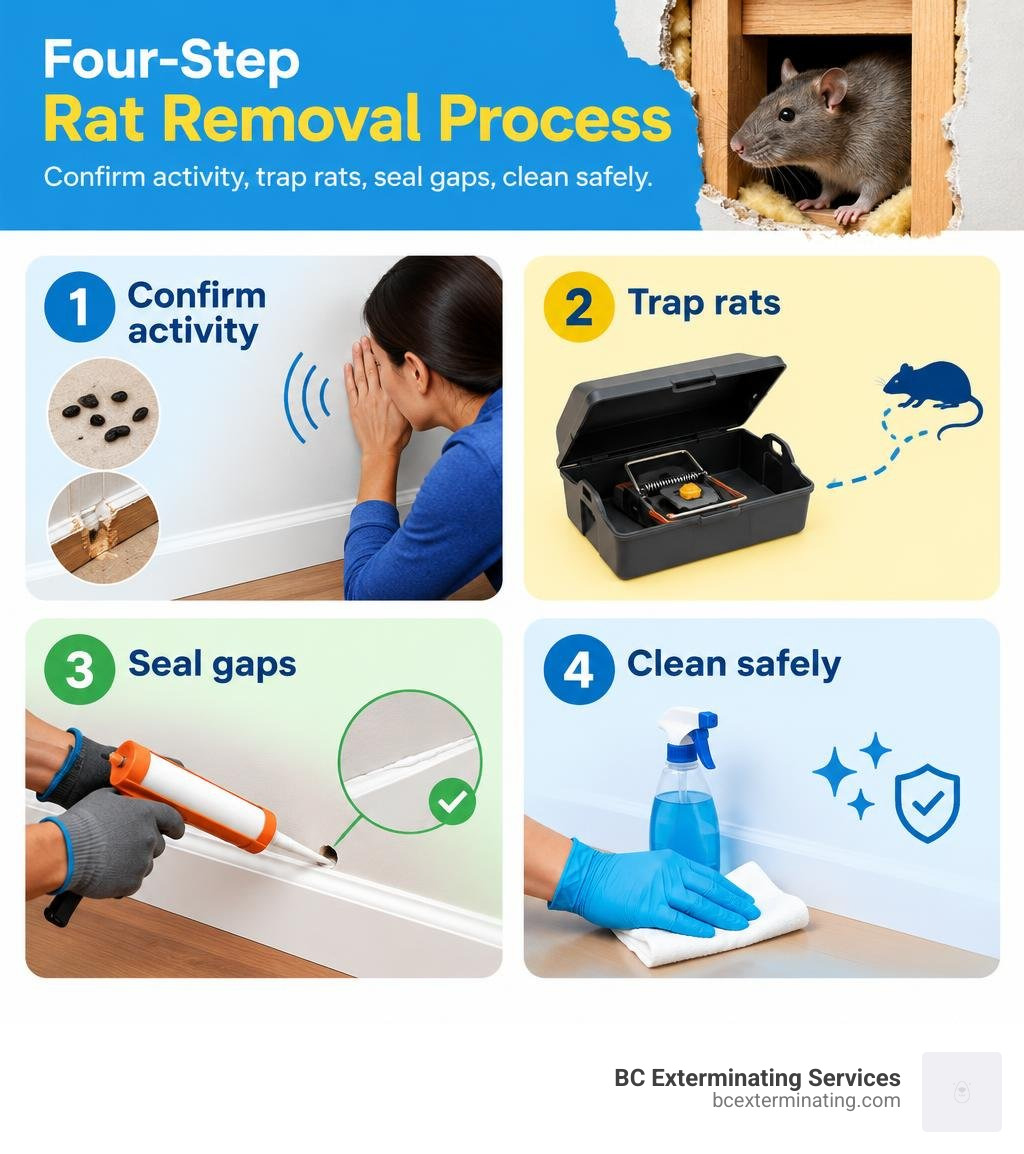
Confirm the activity, trap the rats, then seal their entry points. Listen for heavy scratching, and check along baseboards and behind appliances for droppings or gnaw marks. Place rat-sized snap traps in secure boxes along active routes, away from children and pets. Don’t block an active hole: a trapped rat may die inside the wall.
Act promptly. Rats can contaminate spaces and chew wiring. If you can’t find their route, or you share walls with other units, a pest professional can help locate and remove them before the gaps are sealed. The CDC’s rodent control guidance provides additional background on the health risks associated with rodent infestations.
Identifying the Problem: Signs and Species
Hearing unexplained rustling, thumping, or chewing from within your drywall late at night can be unsettling. When sounds echo through the framing of your house, it is rarely a ghost—it is almost certainly a rodent searching for nesting material or a midnight snack.
Before rushing to buy supplies, you need to identify whether you are dealing with mice, roof rats, or Norway rats. Misidentifying the intruder leads to placing the wrong size traps, using ineffective baits, or overlooking key entry points.
To confirm whether you have mice or rats residing in your wall cavities, look for key physical evidence:
Gnaw Marks: Rats have powerful incisors that grow continuously. They chew through drywall, wood studs, plastic water pipes, and PVC conduits, leaving rough, parallel tooth grooves roughly 2 millimeters wide. Mouse chew marks are much smaller and appear scratched rather than gouged.
Greasy Rub Marks (Sebum): Rodents have poor eyesight and navigate by running along baseboards and stud walls. As they travel, oils and dirt from their fur leave dark, greasy smudges around structural corners, wall openings, and floor joists.
Pet Agitation: Dogs and cats have sharp hearing and an acute sense of smell. If your pet regularly sniffs, paws, or barks at an otherwise blank section of baseboard or beneath kitchen cabinetry, they are tracking animal movement behind the plaster.
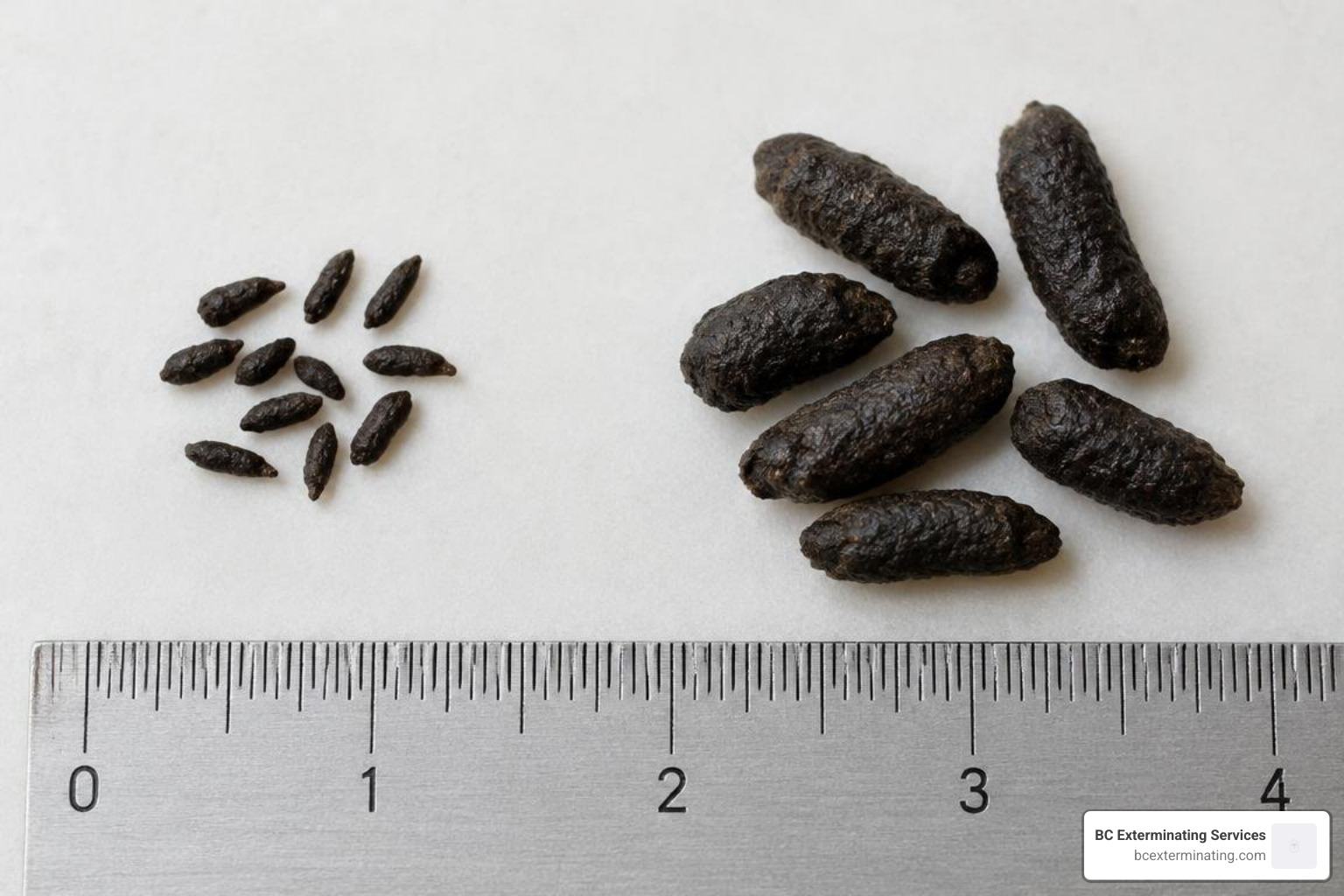
Droppings: Fecal pellets are the most definitive way to tell species apart. Mouse droppings are tiny (3 to 6 mm) with pointed ends, resembling grains of black rice. Rat droppings are significantly larger (10 to 20 mm), thick, and capsule-shaped with blunt ends.
Physical Sign
House Mice
Rats (Roof & Norway)
Dropping Size
3–6 mm (tiny, pointed ends)
10–20 mm (large, blunt, capsule-shaped)
Entry Hole Requirement
5 mm (size of a pencil eraser)
12–25 mm (size of a quarter or 10p coin)
Noise Level
Light, rapid, frantic scurrying
Heavy scratching, gnawing, dull thuds
Chewing Damage
Small shavings, paper, cardboard
Deep grooves on wood, drywall, wires, PVC
Activity Window
Day and night (frequent micro-trips)
Strictly nocturnal (heavy activity at dusk/night)
Signs You Have Rats Inside Walls Instead of Mice
Mice produce faint, fluttering scratching sounds that sound like dry leaves rustling across sheetrock. In contrast, having rats inside walls produces distinct, heavy scraping, loud gnawing, and dragging sounds.
Rats also require larger access gaps. While mice can squeeze through a 5 mm hole, a rat needs a round opening of about 25 mm (roughly the diameter of a quarter or a 10p coin), though a flexible young rat can flatten its ribcage under horizontal cracks of just 12 mm. If you find baseboards gouged open or utility gaps chewed wider, you are dealing with rats.
Why Rodents Invade Wall Cavities and Floor Voids
Wall cavities, crawlspaces, and floor voids offer an ideal environment for rodents:
Thermal Warmth & Shelter: Interior walls are insulated, dark, and sheltered from outdoor predators, wind, and rain.
Abundant Nesting Insulation: Fiberglass and cellulose wall insulation provide soft, moldable materials for females to build brood nests.
Protected Highway Systems: Utility lines, plumbing chases, and HVAC duct runs create uninterrupted interior highways. Rodents can run from the basement to the attic without exposing themselves in open living areas.
Shared Risers in Multi-Unit Buildings: In flats, townhomes, and terrace properties, shared party walls and structural service risers allow rodents to travel freely between adjoining homes.
Step-by-Step Guide: How to Eliminate Rats Inside Walls
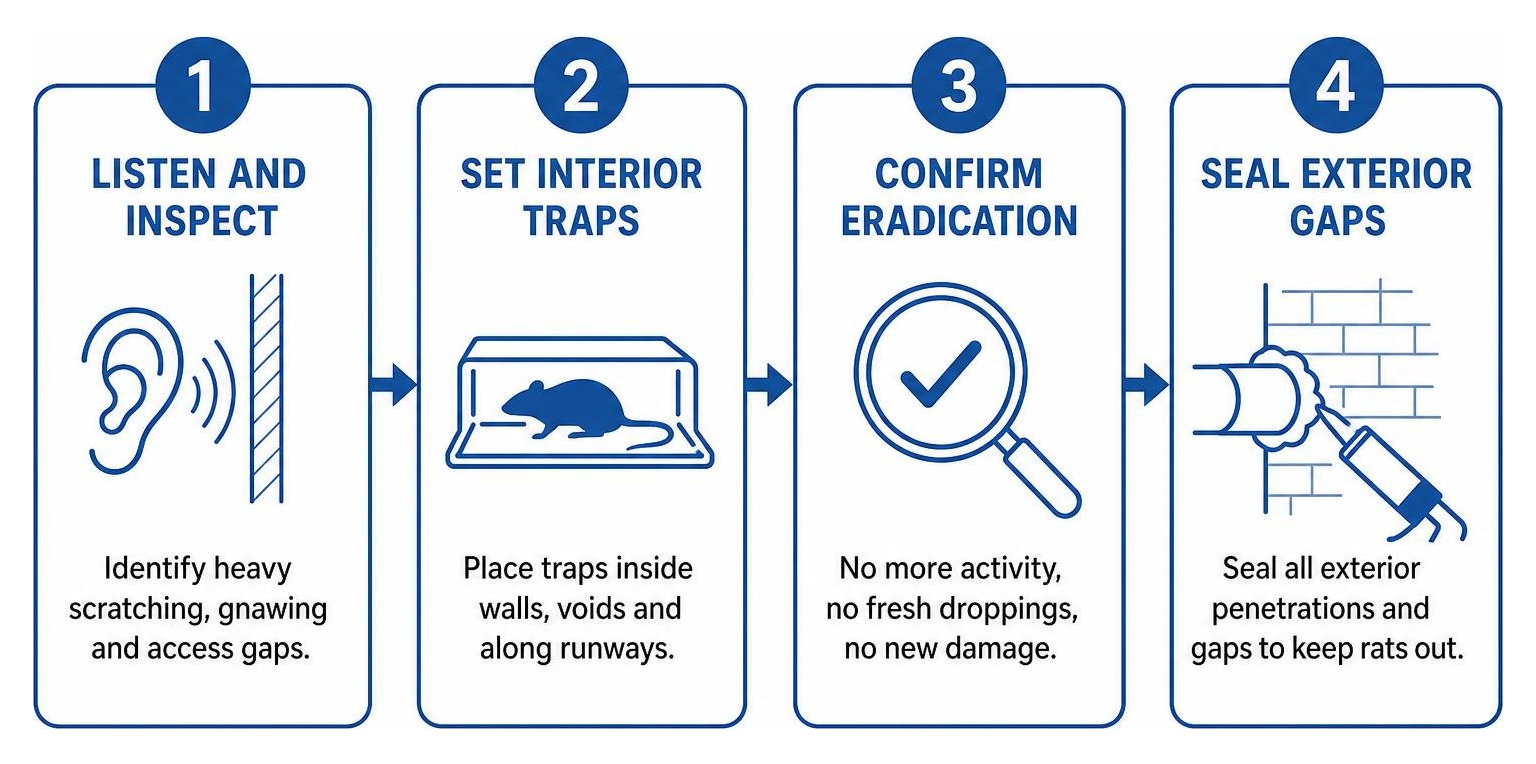
Eliminating rats requires a strict two-stage protocol: trap first, then seal. Sealing building penetrations before eliminating the interior colony traps animals inside, forcing them to chew new exit routes through drywall or die within wall cavities.
Locating Hidden Nests and Runways of Rats Inside Walls
You do not need to tear down your drywall to track rodent activity. You can locate their runs using simple detection techniques:
The Flour Tracking Line: Dust a light, thin layer of flour, talcum powder, or cornstarch along the floor near baseboards, beneath kitchen kickplates, and around pipe penetrations. Check the powder the next morning with a flashlight. Clear paw prints and tail drag marks will reveal their exact pathways.
Acoustic Mapping: Sit quietly in the dark for 15 minutes roughly one to two hours after sunset. Note the exact wall bays where the gnawing or rustling begins. That location is usually their nesting site or main vertical drop.
Plumbing and Appliance Inspections: Pull out the refrigerator, stove, and washing machine. Inspect where water pipes and drain lines enter the drywall. Gaps around these fixtures are common transition points between wall framing and interior living space.
Trapping and Baiting Strategies
Snap traps remain the most reliable and humane tool for capturing rats in residential spaces.
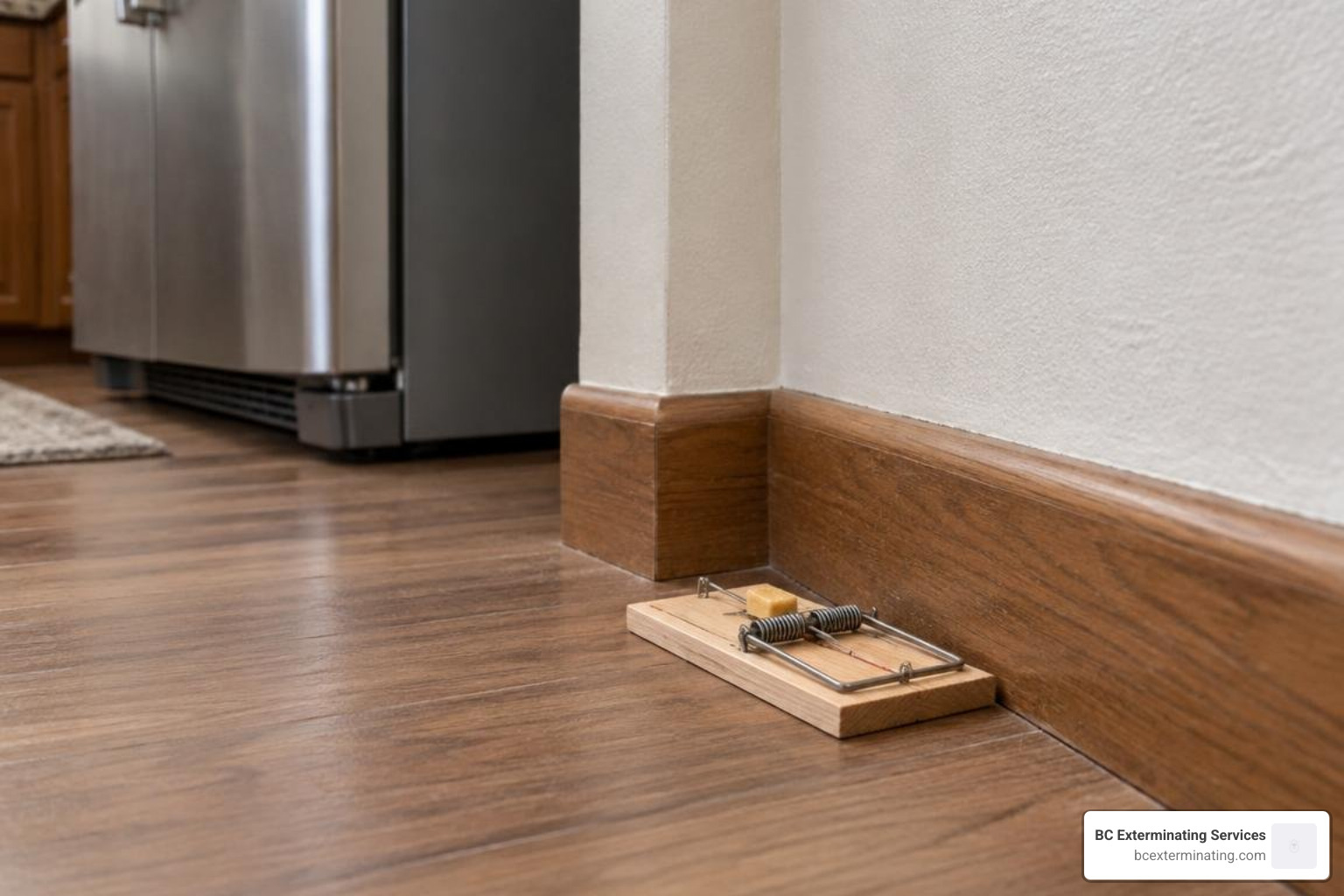
Trap Selection and Placement: Use rat-sized snap traps or heavy-duty enclosed catch boxes. Never use mouse traps for rats; they will trigger the mechanism without catching the animal, making them trap-shy.
Runway Orientation: Place traps perpendicular to the wall, with the baited trigger facing the baseboard. Rats run along vertical edges because their sensitive whiskers (vibrissae) help them navigate in the dark.
Pre-Baiting: Rats are neophobic, meaning they fear new objects introduced to their environment. Set unset traps loaded with peanut butter, hazelnut spread, or bacon grease for two to three nights. Once the rats feed consistently from the unset traps, set the triggers.
Tamper-Resistant Stations: If traps must be placed in kitchens, utility rooms, or areas accessible to children or pets, house them inside rigid, locked, tamper-resistant bait stations.
Safe Natural Deterrents and Humane Eviction
While trapping provides definitive removal, you can make interior wall cavities less hospitable while trapping is underway:
Peppermint Oil Concentrates: Soak cotton balls in high-grade 100% pure peppermint oil and place them inside accessible access panels, crawlspace openings, and behind appliances. The strong menthol odor irritates their sensitive nasal passages. Essential oils serve only as temporary deterrents and will not clear an established infestation on their own.
Ultrasonic Devices (Realistic Limitations): Ultrasonic sound machines are often marketed as quick fixes, but rodents quickly habituate to high-frequency tones, or the sound waves fail to penetrate through solid studs and insulated sheetrock. Physical trapping remains necessary.
One-Way Exclusion Doors: If rats are entering through a known exterior siding or masonry opening, a pest professional can install a spring-loaded, one-way exclusion door. This device allows rats to push their way out to forage at night but prevents them from re-entering, forcing them out without poisons.
Exclusion and Sanitation: Preventing Re-Entry and Odors
Once trapping shows no new activity for 5 to 7 consecutive days, you can begin structural exclusion and clean-up.
Sealing Structural Gaps and Service Penetrations
Rats can chew through standard expanding foam, plastic mesh, plasterboard, and thin wood trim. Permanent rodent-proofing requires chew-proof building materials:
Galvanized Hardware Cloth: Cover crawlspace vents, attic louvers, and weeping holes with 1/4-inch heavy-gauge galvanized steel mesh.
Copper or Stainless Steel Mesh: Stuff wire wool, copper mesh (such as Stuf-fit), or stainless steel scouring pads tightly into narrow gaps around exterior air-conditioning lines, gas pipes, and radiator risers.
Elastomeric Sealants & Hydraulic Cement: Backfill the mesh with polyurethane exterior sealant or hydraulic cement. The abrasive metal tears up rodent incisors if they attempt to chew through the outer caulking layer.
Roofline and Soffit Interfaces: Check roof transitions, fascia boards, and chimney flashing. Roof rats readily climb tree limbs, trellises, and downspouts to enter homes via attic soffits and ridge vents.
Safe Cleanup of Droppings and Dead Rodents
Rodent droppings and urine can spread pathogens, including Salmonella, Leptospirosis, and Hantavirus. Always clean contaminated spaces using wet disinfection methods:
Never Dry-Sweep or Vacuum: Sweeping or vacuuming dry droppings aerosolizes dried urine and viral particles, which can be inhaled.
Personal Protective Equipment (PPE): Wear disposable nitrile gloves, eye protection, and an N95 respirator mask before clearing crawlspaces, floor voids, or subflooring.
Disinfectant Saturation: Generously spray all droppings, nesting materials, and runways with an EPA-registered disinfectant or a 1:10 household bleach-to-water mixture. Let the solution soak for at least 10 to 15 minutes.
Wipe and Bag: Wipe up the soaked material using disposable paper towels. Double-bag the waste in heavy-duty plastic trash bags, seal them tightly, and dispose of them in an outdoor bin. Wash hands thoroughly with soap and warm water immediately afterward.
Frequently Asked Questions About Rodents in Walls
Should I seal wall holes before trapping the rats?
No. Sealing entry holes before trapping is one of the most common pest control mistakes. If you seal external entry gaps while rats are active inside, you trap them within the framing of the home.
Desperate rats will chew through interior baseboards, electrical lines, and sheetrock to search for food and water. If they cannot escape, they will starve and die inside the wall void, creating severe foul odors and insect issues that can last for weeks. Always trap and confirm zero interior activity first, then seal all exterior entry points.
Can rats in the walls chew through drywall and electrical wires?
Yes. A rat’s front incisors rate between 4.0 and 5.5 on the Mohs hardness scale—harder than copper, aluminum, and lead. Rats gnaw constantly to keep their teeth filed down.
When nesting inside wall cavities, they frequently strip the plastic insulation off copper electrical wiring, exposing live metal and creating an immediate fire hazard. They can also chew through structural lumber, PEX plumbing lines, and standard sheetrock.
What should I do if a rat dies inside the wall cavity?
If a rat dies inside a wall, a strong organic decomposition odor will develop within 24 to 48 hours and can persist for up to three weeks depending on ambient humidity and temperature.
To resolve the problem:
Locate the Carcass: Use your nose to find the exact wall stud bay where the odor is strongest, or scan the wall with an infrared thermal imaging camera (a decaying carcass briefly generates heat before cooling).
Access and Remove: Cut a small, neat 4-inch square access hole in the drywall near the baseboard using a drywall hand saw. Remove the carcass using heavy gloves, bag it securely, and seal the opening.
Disinfect and Neutralize Odor: Thoroughly spray the inner wall void with an enzymatic odor eliminator, allow it to dry, and repair the drywall patch.
When to Call a Professional Exterminator
While a single mouse or isolated rat can occasionally be resolved with DIY snap trapping, wall-dwelling rat infestations often require professional intervention. A fortnight of delay can allow a breeding pair to turn into a much larger, more destructive colony.
You should hire a licensed professional if:
Scratching noises persist across multiple wall bays, floors, or ceiling voids despite continuous interior trapping.
You live in a multi-unit townhouse, flat, or shared-wall structure where exterior entry points span neighboring rooflines or shared basements.
You cannot locate the primary exterior breach points entering the home’s structure.
At BC Exterminating, we specialize in resolving rodent problems across the Washington, DC metro area (including Gaithersburg, MD). We start with a comprehensive structural inspection, using thermal cameras, smoke testing, and acoustic mapping to identify the root cause of the infestation.
Our technicians handle both active colony removal and structural exclusion using EPA-registered, low-odor products that keep your home, pets, and children safe. If you need assistance with persistent pests, schedule professional pest control and rodent exclusion to protect your property.