
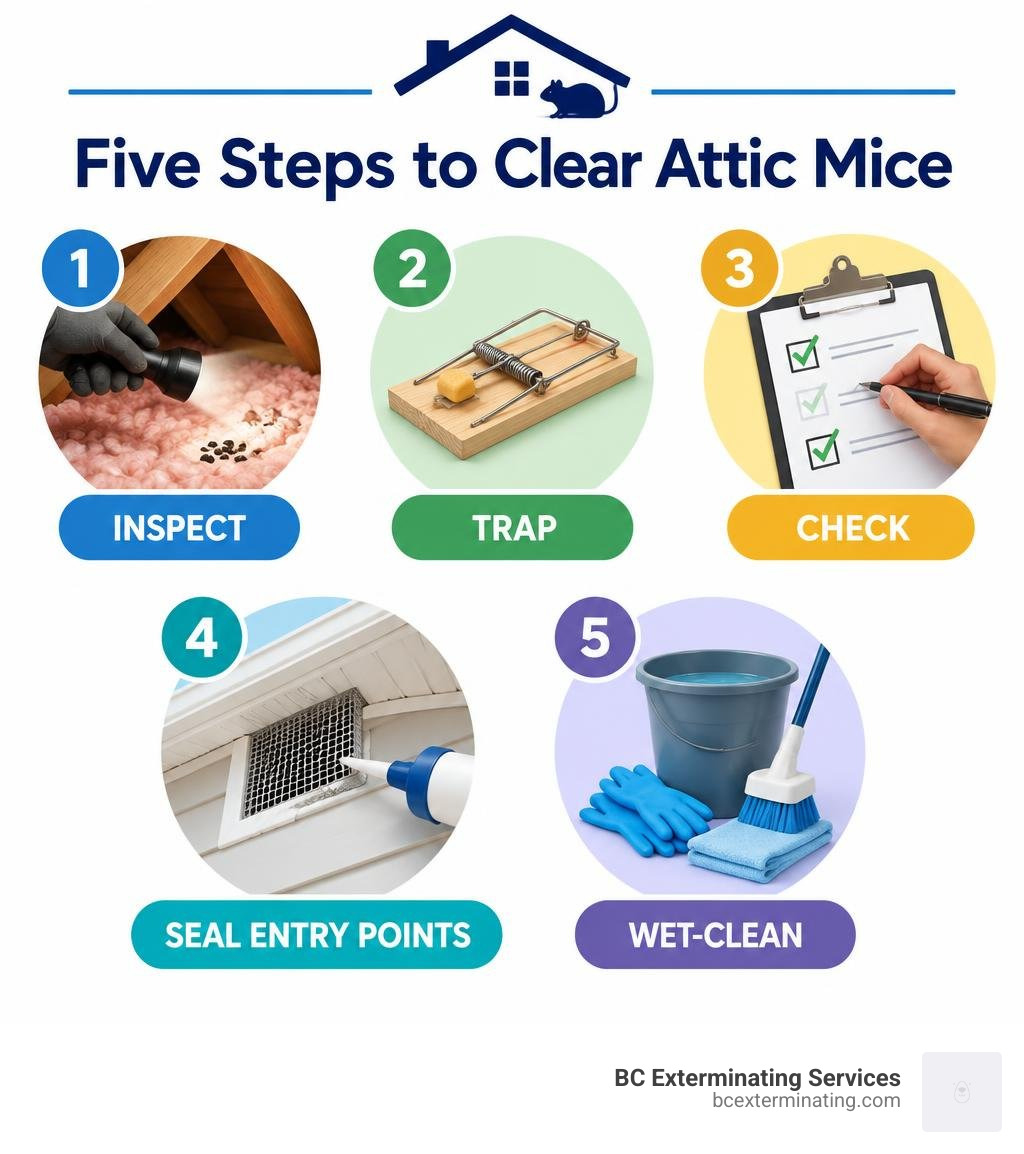
Inspect, trap, seal, and clean. Look for droppings and small gaps around vents, soffits, and pipes. Set snap traps along the paths mice use and check them daily. Once the mice are gone, seal entry points with metal mesh or copper wool and a durable sealant. Wet-clean droppings and nesting material; never sweep or vacuum them dry.
Act soon if you hear scratching at night. Mice can breed quickly, contaminate insulation, and chew wiring. Traps alone may catch the mice you have now, but sealing their way in is what helps keep the attic clear.
When you hear mysterious scurrying directly above your bed at 2:00 AM, your mind naturally races. Before jumping into treatment, we need to know exactly what kind of pest made itself comfortable in your rafters. Different wildlife require completely different handling methods, and mistaking a squirrel for a mouse will waste precious time.
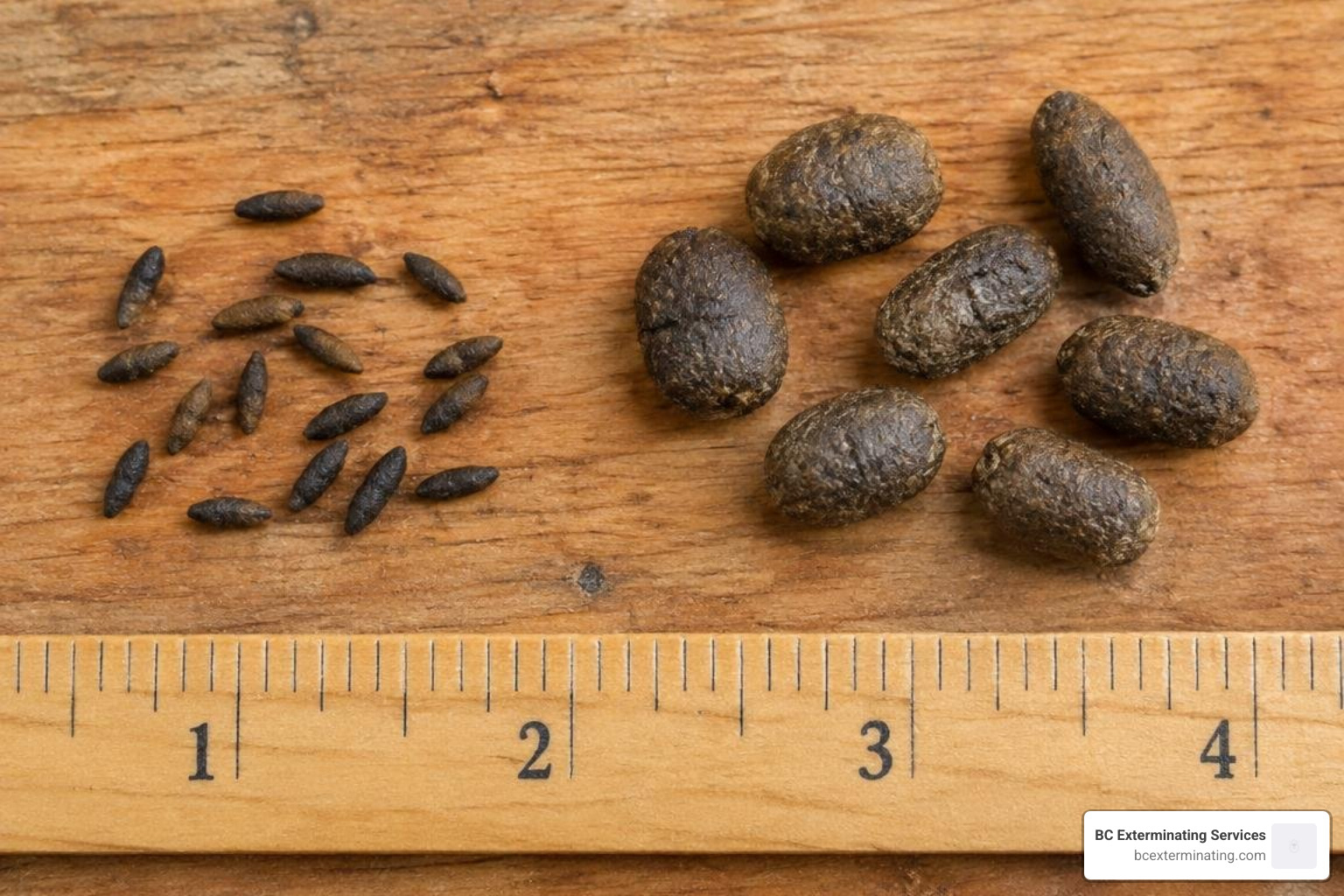
| Characteristic | House Mice | Tree Squirrels | Nesting Birds | Roof Rats |
|---|---|---|---|---|
| Activity Timing | Strictly nocturnal (active late night to dawn) | Diurnal (most active at sunrise and sunset) | Diurnal (morning chirping and daytime flutter) | Nocturnal (late evening through early morning) |
| Droppings Size & Shape | Small pellets (approx. 6 mm), pointed ends | Oval pellets (approx. 10–12 mm), rounded ends | White/dark paste, messy splatters | Spindle or banana-shaped (approx. 12–15 mm) |
| Vocalizations | High-pitched squeaks, faint scratching | Loud scampering, chattering, barking sounds | Chirping, fluttering wings, high squawks | Squealing, heavy scratching, wall thumps |
| Nesting Materials | Finely shredded insulation, paper, fabric | Bundled twigs, dry leaves, large clumps of insulation | Twigs, dry grass, feathers, straw | Shredded cardboard, soft fibers, leaves |
| Gnaw Mark Size | Very small, fine parallel grooves (1–2 mm wide) | Large, deep teeth marks on wood and siding | None (birds do not gnaw or chew framing) | Prominent, deep chisel marks on beams and pipes |
Mice are notorious lightweight sprinters. Because a typical adult house mouse weighs less than an ounce, its footsteps sound like light tapping, rustling, or faint scraping against the drywall. If the sound overhead sounds like a bowling ball rolling across the ceiling, you are likely dealing with squirrels, raccoons, or roof rats rather than small mice.
Sound is usually your first clue. Because mice are nocturnal, their activity peaks when your house goes quiet. You will hear them traveling through wall cavities, scampering across ceiling joists, and digging into insulation.
They use exterior wall cavities as vertical superhighways, easily climbing between the basement, living areas, and attic. If you hear rhythmic scratching inside a single wall stud bay, a mouse is likely gnawing an exit hole or gathering your attic insulation to build a brood nest.
A single breeding pair can quickly transform into a full-scale colony. Female mice can produce five to ten litters each year, averaging five to six pups per litter. Because those pups reach reproductive maturity in just four weeks, a small oversight can spiral into a heavy infestation within months.
Key indicators of a heavy, established infestation include:
Clearing an attic requires a systematic Integrated Pest Management (IPM) approach. Throwing a random trap into the center of the floor will not solve the issue. Successful eradication relies on strategic trap placement, high trap density, proper lures, and eliminating access to water and food.

According to provincial wildlife guidance on managing rat and mouse pests, non-chemical physical removal combined with structural exclusion is the most reliable long-term solution for domestic rodent problems. To execute the best way to get rid of mice in attic spaces, you must target the specific runways rodents travel along the perimeter walls and ceiling joists.
Classic wooden or heavy-duty plastic snap traps remain the gold standard for rapid elimination. They kill instantly, create no lingering chemical hazards, and let you physically confirm every capture.
Follow these field-tested rules for attic snap trapping:
If you prefer non-lethal methods, live-catch box traps can capture mice without physical injury. However, live trapping demands strict daily discipline.
The animal advocacy organization Humane World for Animals highlights that live traps must be inspected multiple times per day to prevent the animal from experiencing severe dehydration or fatal stress. If you choose live capture, follow these precautions:
It can be tempting to scatter over-the-counter rodenticide poison blocks throughout an attic and walk away. However, we strongly caution homeowners against using toxic baits inside residential lofts.
After ingesting an anticoagulant bait block, it typically takes 1 to 3 days for the rodent to succumb. During that delayed window, mice will seek seclusion, commonly crawling deep into inaccessible exterior wall cavities, under subfloors, or inside heating ductwork to die.
A single dead mouse decaying inside a warm wall bay produces a foul, pervasive odor that can render living areas uninhabitable for weeks. Furthermore, poisoned mice that stumble outdoors risk causing secondary toxicity in domestic cats, neighborhood dogs, and native raptors like hawks and owls that prey on disoriented rodents.
You cannot trap your way out of a rodent infestation if the front door remains wide open. Mice can squeeze their bodies through any hole, crack, or gap as small as a dime (about 1/4 inch or 6 mm). To permanently solve the problem, complete exterior structural exclusion is mandatory.
Mice are skilled climbers. They can run vertically up brick walls, climb rough timber siding, sprint along power lines, and use overhanging tree branches as elevated bridges to your roof.
Conduct a rigorous exterior inspection around the upper perimeter of your roof:
Trim all tree branches and ornamental shrubbery at least 6 to 8 feet away from your gutters and roofline to cut off climbing access.
Never rely on standard expanding spray foam or silicone caulk alone. Mice have strong teeth that can easily chew through foam, rubber, plastic, and soft timber.
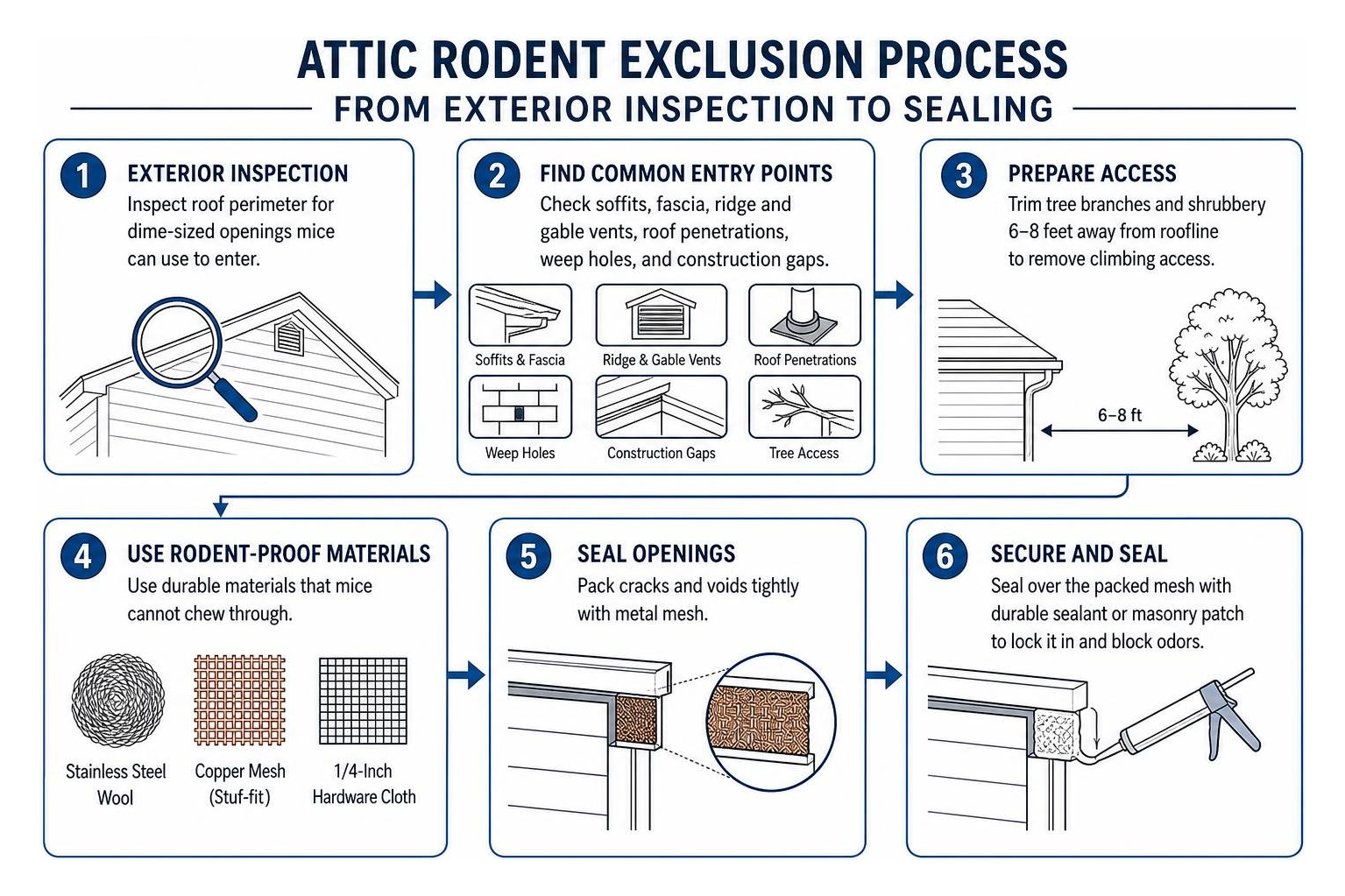
Use durable, rodent-proof materials:
Once your traps show zero new activity for two consecutive weeks and all exterior openings are sealed, you must safely sanitize the attic. Mouse droppings, urine trails, and contaminated insulation present real health hazards if handled improperly.
Alberta Health Services records 81 confirmed cases and 15 fatalities from hantavirus pulmonary syndrome since tracking began in 1989, including a confirmed death in 2026. This serious respiratory virus is primarily spread when dried rodent urine, saliva, or droppings are disturbed and inhaled as dust particles.
Never use a household broom or standard vacuum cleaner to clean rodent droppings. Dry sweeping or standard vacuuming aerosolizes infectious microscopic dust particles directly into the air you breathe.
Follow this standard safety protocol:
Attics are popular storage spaces for seasonal decorations, clothing, and family keepsakes. Unfortunately, standard cardboard boxes and plastic trash bags provide ideal nesting materials and shelter for wandering mice.
To safeguard your belongings and keep mice from returning:
Catching a single mouse rarely solves an infestation. Mice establish communal family structures consisting of a dominant male, several breeding females, and litters of young pups.
When you trap an adult, hidden juveniles and secondary rodents will continue foraging. Maintain an active grid of set traps for at least two to three weeks after the last catch to ensure the entire population has been eliminated.
Yes. Rodents are responsible for a significant number of unexplained residential structure fires every year. Their continuously growing incisor teeth require daily filing against hard surfaces.
Mice routinely gnaw through the exterior insulation coating of standard non-metallic (Romex) electrical lines in attics. This exposes live copper wire conductors, creating severe arcing, short circuits, and dangerous fire hazards inside attic insulation.
While a localized intrusion can often be handled with patience and traps, you should call a licensed pest control professional if:
Clearing mice from your attic requires a methodical, step-by-step approach: accurately identify the pest, deploy high-density snap traps along active travel paths, seal all exterior gaps with durable copper mesh and metal hardware cloth, and wet-clean contaminated areas safely. Taking decisive action today protects your home’s structural framing, wiring, and indoor air quality.
At BC Exterminating, our team specializes in an inspection-first approach designed to protect your home permanently. We combine thorough inspections with full structural exclusion services, attic sanitization, and low-odor, pet-friendly treatments to eliminate nuisance rodents and keep them out for good. If you are hearing scratches overhead, get in touch with our team today to restore safety, quiet, and comfort to your home.